
Invisalign Rules Explained: the 22-Hour Rule and the 30-Minute Rule
Invisalign rules explained: the 22-hour wear-time rule and the 30-minute meal rule. Follow these and your aligners track more predictably; however, ignore them and you increase the risk of delays and refinements.
Invisalign rules explained: use the 22-hour rule Invisalign target and the 30-minute rule Invisalign habit to protect Invisalign wear time and reduce Invisalign tracking issues.
What is the Invisalign 22-hour rule?
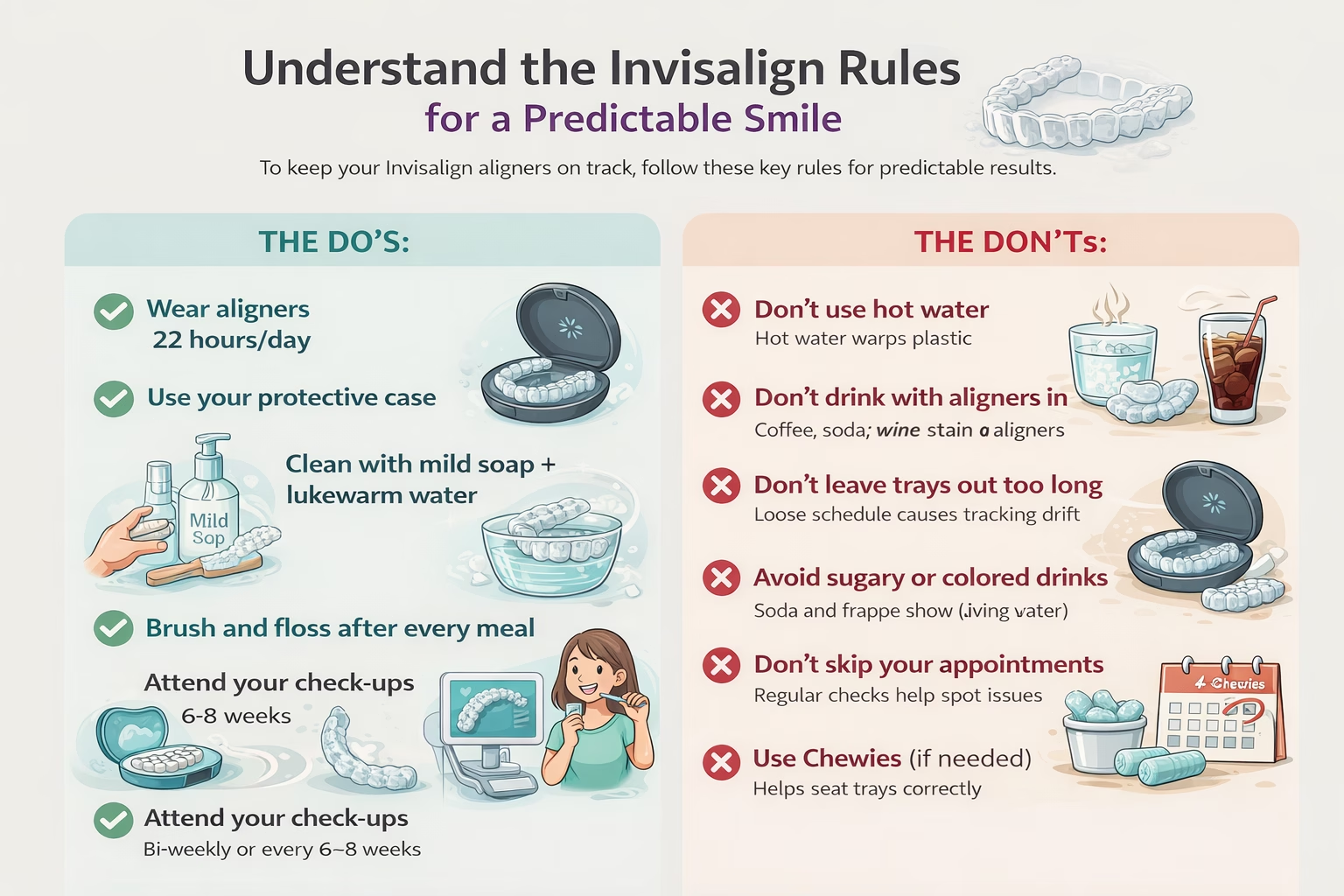
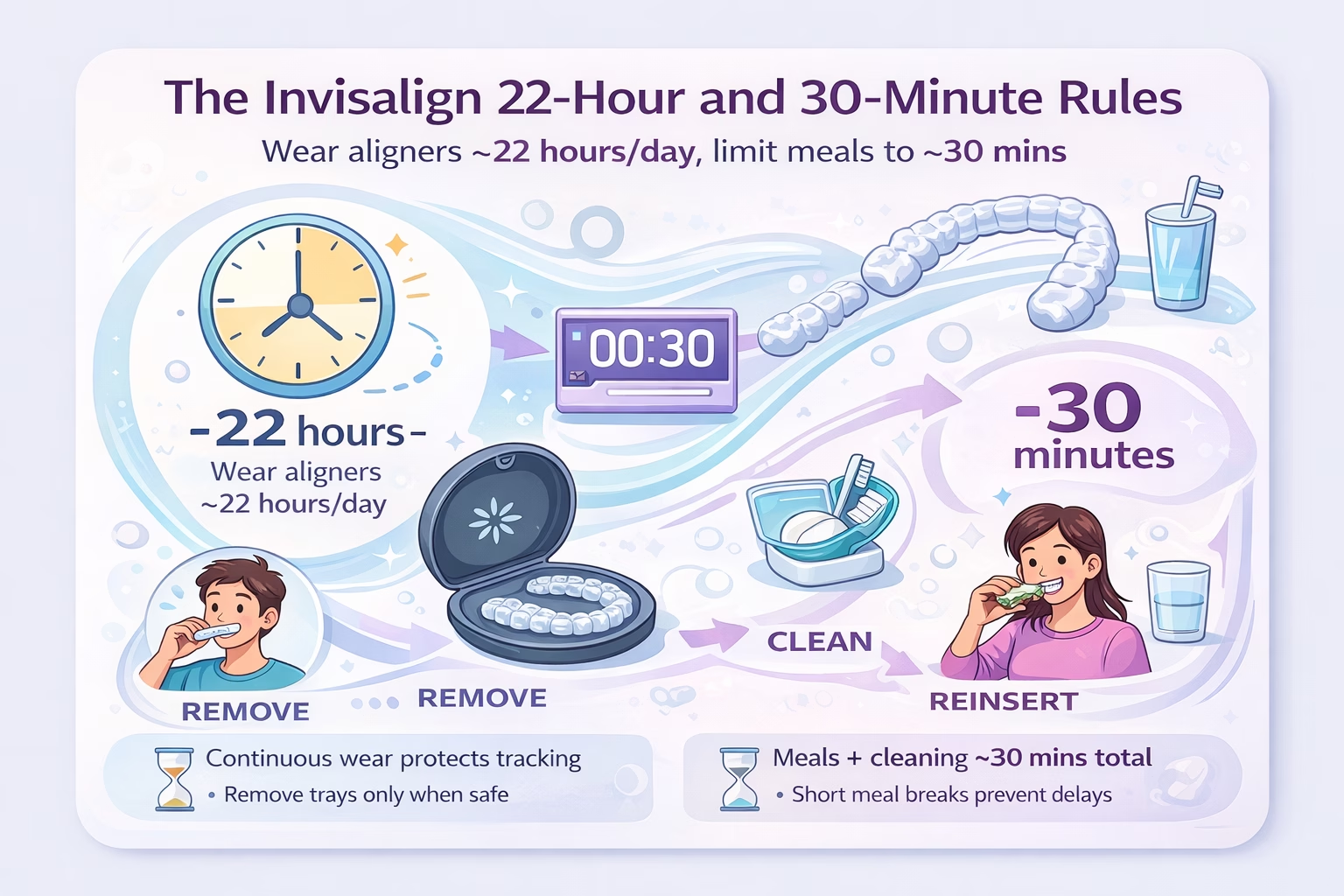
The 22-hour rule means you aim to wear your aligners for around 22 hours per day, only removing them for meals, drinks (other than water) and cleaning. In other words, aligners should be “in” by default to protect Invisalign wear time.
Why 22 hours matters for tracking
Aligners are designed around near-continuous force. Therefore, when wear time drops, teeth can lag behind the planned movement. As a result, trays may feel increasingly tight, may not seat fully, or can show small gaps at the edges.
What counts as “time out”?
Time out includes everything: eating, drinking non-water drinks, brushing, flossing, and “just leaving them out for a bit”. That said, short, planned removal windows are usually fine—provided your daily total stays high.
What happens if you don’t hit 22 hours?
- Tracking drift: teeth move less than expected, so the next aligner can be harder to seat.
- More refinements: you may need new scans and additional trays if the real tooth position diverges from the plan.
- Longer treatment: repeated short days typically add calendar time.
Fast recovery if you had a “bad wear day”
First, return to full wear immediately. Next, use chewies (if provided) to seat the aligners properly. Finally, if the tray won’t seat or gaps worsen over the next 24–48 hours, book a review before moving on.
Practical benchmark: treat 22 hours as the target. A one-off short day is rarely the issue; however, repeated short days create predictable Invisalign tracking problems.
To understand aligners more generally, start with our Invisalign treatment guide. Meanwhile, for timelines, see how long Invisalign takes.
How strict do you need to be?
Be strict with the behaviours that reliably cause failure, and sensible with everything else. For example, one longer meal window occasionally is usually recoverable; however, making it a pattern often leads to tracking issues.
- Strict: wear trays overnight, avoid “skipping days”, and keep daily wear time consistently high.
- Strict: never use hot water (it can warp plastic), and avoid food/drinks with trays (other than water).
- Sensible: if a day slips, tighten up the next few days rather than panicking.
If you’re deciding between removable and fixed options, our Invisalign vs braces comparison provides a wider context. In addition, cost differences are covered in our Invisalign cost guide.
Real-life tips (social events, work, travel)
- Social events: decide removal windows in advance. That said, one planned longer window beats multiple unplanned ones.
- Workdays: block two short meal windows; meanwhile, avoid snack grazing between them.
- Travel: carry a basic hygiene kit. If you can’t clean properly, rinse well, reinsert, and clean thoroughly later.
- Soreness days: don’t reduce wear—use simple comfort strategies and keep trays in (see is Invisalign painful?).
For results expectations, see Invisalign before & after. Also, for safety-led comparisons with remote systems, see Invisalign vs mail-order aligners.
FAQs
Is the 22-hour rule real, or just a guideline?
It’s a practical target because aligners work best with near-constant wear. Therefore, the more consistently you hit it, the more predictable tracking tends to be.
What if I only wear Invisalign 18–20 hours a day?
If it happens occasionally, you can usually recover by tightening up the next few days. However, if it becomes routine, teeth can lag behind the plan, which increases the chance of extra checks or refinements.
What is the 30-minute rule for Invisalign meals?
It’s a habit rule: keep trays out for about 30 minutes per meal so your daily wear time stays high and teeth rebound less between wear cycles.
Does coffee count—can I drink with aligners in?
Plain water is fine. Hot drinks can warp plastic, and coloured/sugary drinks can stain trays and raise decay risk if sugars sit under aligners. Instead, remove trays, drink, rinse, and reinsert quickly.
How do I catch up if I had a bad day for wear time?
Don’t double up by wearing the next tray early. Instead, return to full wear immediately. If trays stop seating fully or feel increasingly tight, book a review before moving on.
How do I know if my Invisalign is tracking properly?
Trays should seat fully with minimal gaps. If a tray won’t “click” on, gaps increase, or you can’t seat it with chewies, you may need a check before switching to the next aligner.
Do I need chewies and regular check-ups?
If chewies are provided, they help seat trays so force is applied as planned. In addition, regular reviews help spot small tracking problems early—before they become delays.
After Invisalign, why are retainers non-negotiable?
Teeth naturally want to drift. Therefore, retainers protect your outcome and help keep your result stable long-term.
Want Invisalign done properly—without guessing the rules?
Book a consultation at Azure Dental (Formby). We’ll confirm suitability and give you a clear, realistic plan to stay on track.